
What a Water Heater Costs in McHenry County
By Ludwig Family Plumbing · February 11, 2025 · 7 min read
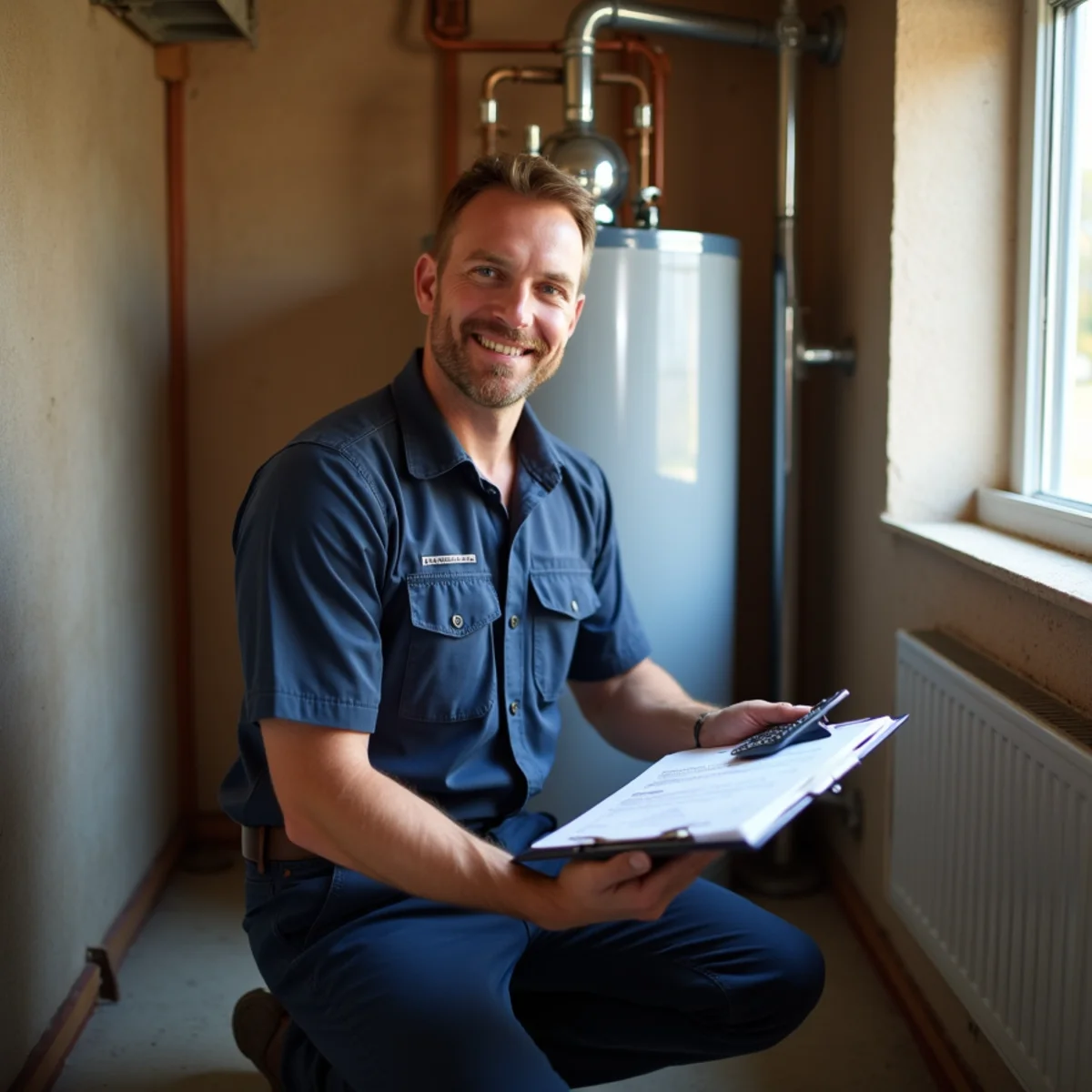
"How much for a new water heater?" is one of the most common questions we get — and the honest answer is that it depends on more than the size of the tank. Rather than quote a fake flat price, here's a real breakdown of what drives the cost in McHenry County so you can budget with clear eyes.
Tank vs. tankless is the biggest factor
A standard tank water heater has the lowest up-front cost and is the right choice for many homes. A tankless unit costs more to buy and install but delivers endless hot water, takes up less space, and lasts longer — often 20 years versus 8–12 for a tank.
The tankless premium isn't just the unit. Converting from tank to tankless can require gas-line upsizing and new venting, which adds to the first install (but not to future replacements).
Capacity and fuel type
A 40-gallon heater costs less than a 50- or 75-gallon model, and your household size and number of bathrooms determine what you actually need. Undersizing to save money just means running out of hot water.
Gas and electric units differ in price and operating cost. If you're switching fuel types, factor in the electrical or gas work that switch requires.
Code upgrades and the 'hidden' costs
This is where estimates often diverge. Bringing an older installation up to current code can add an expansion tank, a new temperature-and-pressure relief valve and discharge line, a drip leg on the gas line, a drain pan, updated venting, or new shutoffs. A reputable plumber includes these where they're required; a lowball quote often leaves them out.
- Expansion tank (often required on closed systems)
- New T&P relief valve and discharge pipe
- Proper venting for gas units
- Drain pan and new shutoff valves
- Permit and inspection fees where applicable
Access and installation difficulty
A heater in an open basement is a quick swap. One crammed into a tight closet, tucked in an attic, or on a second floor takes longer and costs more to remove and replace. Difficult access is a legitimate cost factor, and a good plumber will point it out before quoting.
The hard-water factor in McHenry County
Our hard water shortens water-heater life by building sediment in the tank. That sediment insulates the burner, raises your energy bill, and causes the popping and rumbling you may hear from an aging unit. If you're on hard water, budgeting for an annual flush — or pairing the new heater with a water softener — protects the investment and can pay for itself in extended life and lower bills.
Repair or replace?
If your unit is under about eight years old and the failure is a part — a heating element, thermocouple, or thermostat — a repair is usually the smart spend. If the tank itself is leaking, or the unit is 10+ years old with a major failure, replacement is the better value. A leaking tank is always a replacement, because the steel shell has corroded through.
The right move is to get a straight assessment: the repair price, the life you'd be buying, and the replacement cost side by side. That's how you make a decision you won't regret.
Where the lowball quotes hide the money
When two water-heater quotes are hundreds apart, the gap is usually in the code work, not the tank. An honest install includes an expansion tank where the system needs one, a new T&P relief valve and discharge line, proper venting, a drain pan, and new shutoffs. Skip those and the number drops — until the inspector or the next leak finds them.
Ask any quote to spell out what's included beyond the unit. On our hard water, also ask about a flush schedule or a softener; sediment is the single biggest reason local heaters die years early, and it's the cheapest thing to prevent.
The Bottom Line
There's no honest flat price for a water heater, but there is an honest breakdown — and now you have it. Ask any quote to itemize the code work, and budget for the hard-water maintenance that keeps a new unit from aging early.
Need a hand from a licensed, family-owned McHenry County plumber? Call (831) 290-4327 — we're available 24/7 — or request a free quote.
How We Can Help
Serving Lake in the Hills, Huntley, Crystal Lake and all of McHenry County.
Frequently Asked Questions
For larger households and homeowners staying long-term, often yes — endless hot water plus a longer lifespan can justify the premium. For a smaller home or a shorter time horizon, a quality tank may be the better value. We'll show you the payback for your situation.
A conventional tank generally lasts 8–12 years, but McHenry County's hard water can cut that short without maintenance. An annual flush is the single best thing you can do to reach the high end of that range.
Not dramatically — operating cost is driven more by fuel type, efficiency, and your hard-water sediment than by tank size. Sizing to your real demand matters more, because an undersized unit just runs out of hot water while you're paying to reheat it constantly.