
Sewer Line Replacement Cost in Illinois Explained
By Ludwig Family Plumbing · May 6, 2025 · 7 min read
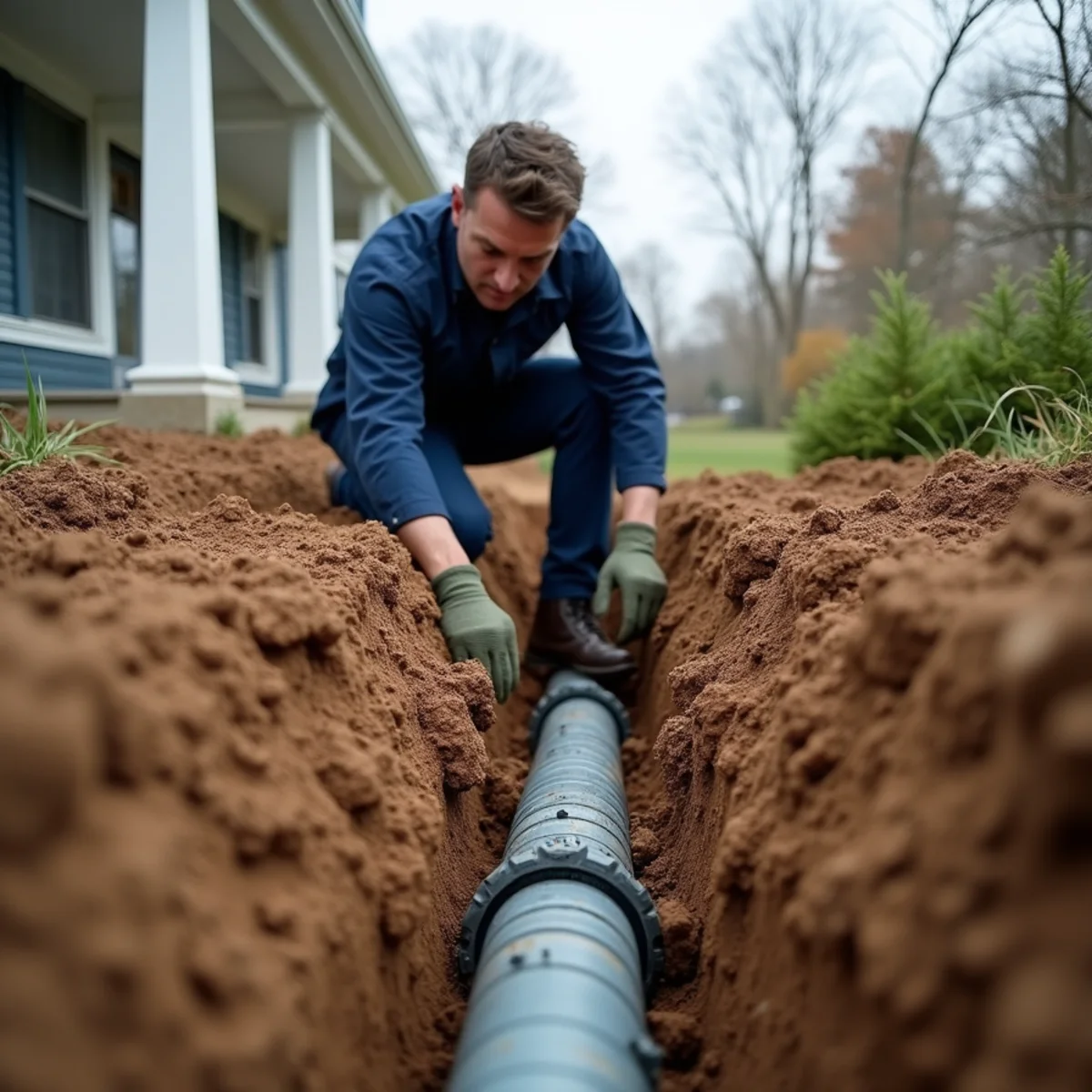
Sewer line work carries one of the widest price ranges in plumbing — a small spot repair and a full replacement can differ by an order of magnitude. That's not vagueness; it reflects real differences in what the job requires. Here's what drives the cost so the numbers make sense.
First: what's actually wrong?
The biggest cost driver is the defect itself. Clearing roots or a clog is inexpensive. Repairing a cracked or offset joint in one spot costs more. Replacing a long, collapsed, or badly bellied section costs the most. You can't budget accurately until you know which one you're facing — which is why a camera inspection comes first.
Trenchless vs. traditional excavation
Traditional repair means digging a trench to reach and replace the pipe. Trenchless methods — pipe lining (creating a new pipe inside the old one) or pipe bursting (pulling a new pipe through while breaking the old) — can fix a line with far less digging.
Trenchless often costs more per foot but can be cheaper overall when digging would mean tearing up a driveway, mature landscaping, or a finished patio. Whether it's an option depends on the condition and layout of your line.
- Spot repair — lowest cost, fixes one localized defect
- Trenchless lining/bursting — minimal digging, good under driveways and landscaping
- Full excavation and replacement — highest cost, needed for collapsed or long-run failures
Depth, length, and what's on top
A sewer lateral six feet down costs more to reach than one that's shallow. A long run to the street costs more than a short one. And what sits above the line matters enormously: replacing a section under an open lawn is straightforward, while going under a driveway, a garage slab, or a mature tree adds cost for the work and the restoration afterward.
Permits, restoration, and access
Sewer work usually requires a permit and inspection, and municipalities have their own requirements. After the pipe work, there's restoration — backfilling, resodding, or repouring concrete. Tight access that limits equipment can also raise labor. A complete estimate accounts for all of this, not just the pipe.
Why the camera inspection saves money
It can feel like an extra step, but a camera inspection almost always saves money. It tells you exactly what's wrong and precisely where, so you can choose the least invasive fix that actually solves the problem — instead of over-digging on a guess or paying to clear a line that keeps failing.
If you've had repeated backups, get the line scoped before authorizing any major work. It's the single best way to avoid overpaying.
Why 'per foot' pricing can be misleading
Sewer quotes love a per-foot number, but depth and what sits on top move the real cost far more than length. Six feet down under an open lawn is a very different job from four feet under a driveway or a mature oak — same footage, wildly different price and restoration.
This is exactly why the camera inspection pays for itself. Knowing the defect, its depth, and its location lets you choose trenchless lining where it fits and reserve full excavation for the sections that truly need it, instead of pricing the whole run at worst-case.
The Bottom Line
Sewer costs range widely for real reasons — the defect, the depth, and what's on top. A camera inspection is the one step that turns that uncertainty into a targeted, fairly priced fix, so scope the line before you authorize any big dig.
Need a hand from a licensed, family-owned McHenry County plumber? Call (831) 290-4327 — we're available 24/7 — or request a free quote.
How We Can Help
Frequently Asked Questions
Damage from a backup may be covered if you carry a water-backup endorsement, but the repair of the pipe itself (especially wear-and-tear or root damage) is often not. Some homeowners add a separate service-line coverage. Check with your insurer.
Typically the homeowner is responsible for the lateral from the house to the connection at the main, while the municipality maintains the main itself. We confirm the responsibility line for your property before any work.
Many trenchless lining or bursting jobs are completed in a day, versus longer for a full excavation and restoration. The camera inspection tells us whether your line is a candidate, which is why we scope before quoting a method.