
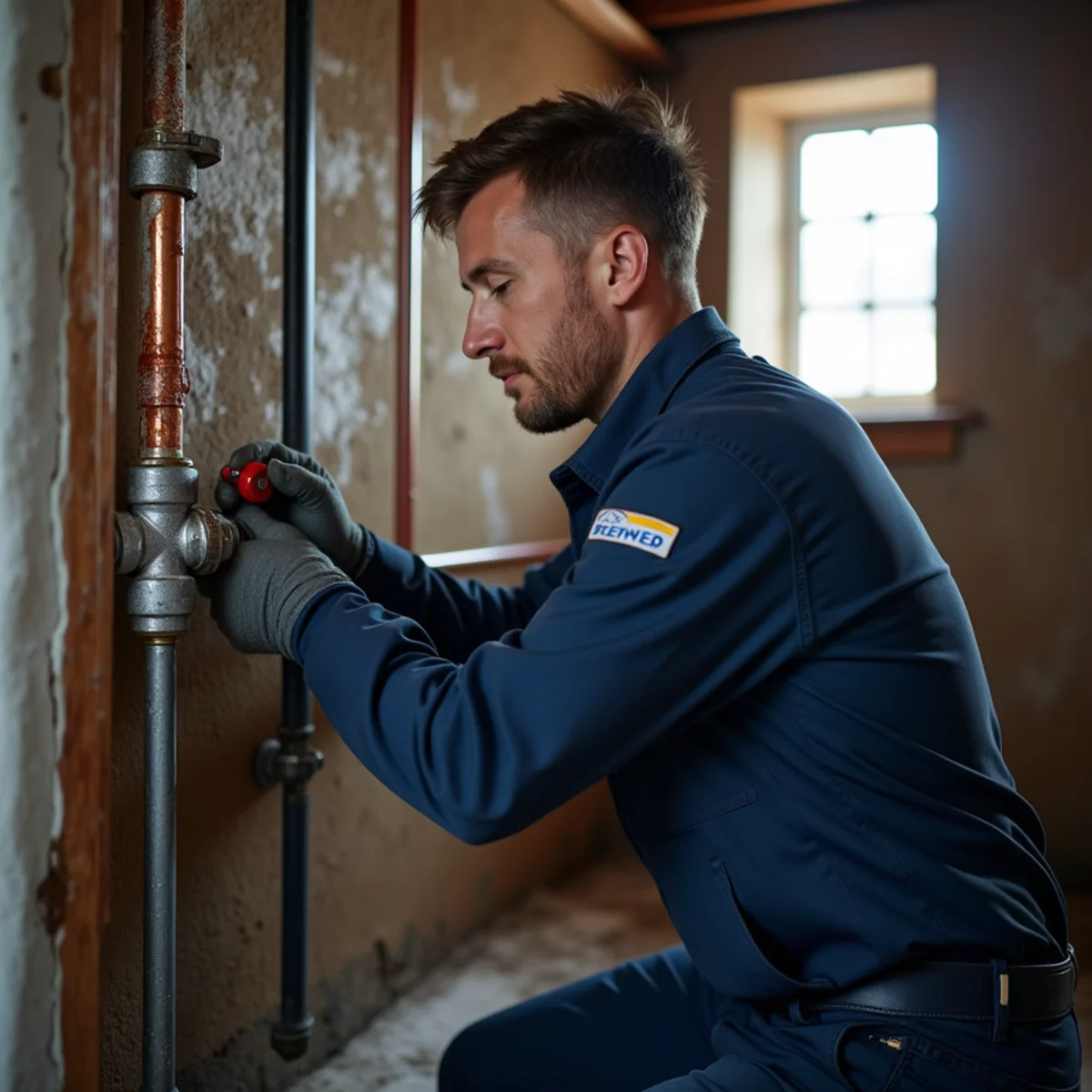
Illinois winters are hard on plumbing. When the temperature drops below zero, water in an exposed or poorly insulated pipe freezes, expands, and can split the pipe — then floods the home when it thaws. Ludwig Family Plumbing responds to frozen and burst pipes 24/7 across Lake in the Hills and McHenry County, thaws lines safely, and repairs the damage.
If a pipe has already burst, this is an emergency: shut off the main and call us. If a pipe is frozen but hasn't burst yet, there's a safe window to thaw it and prevent the break — but never with an open flame.
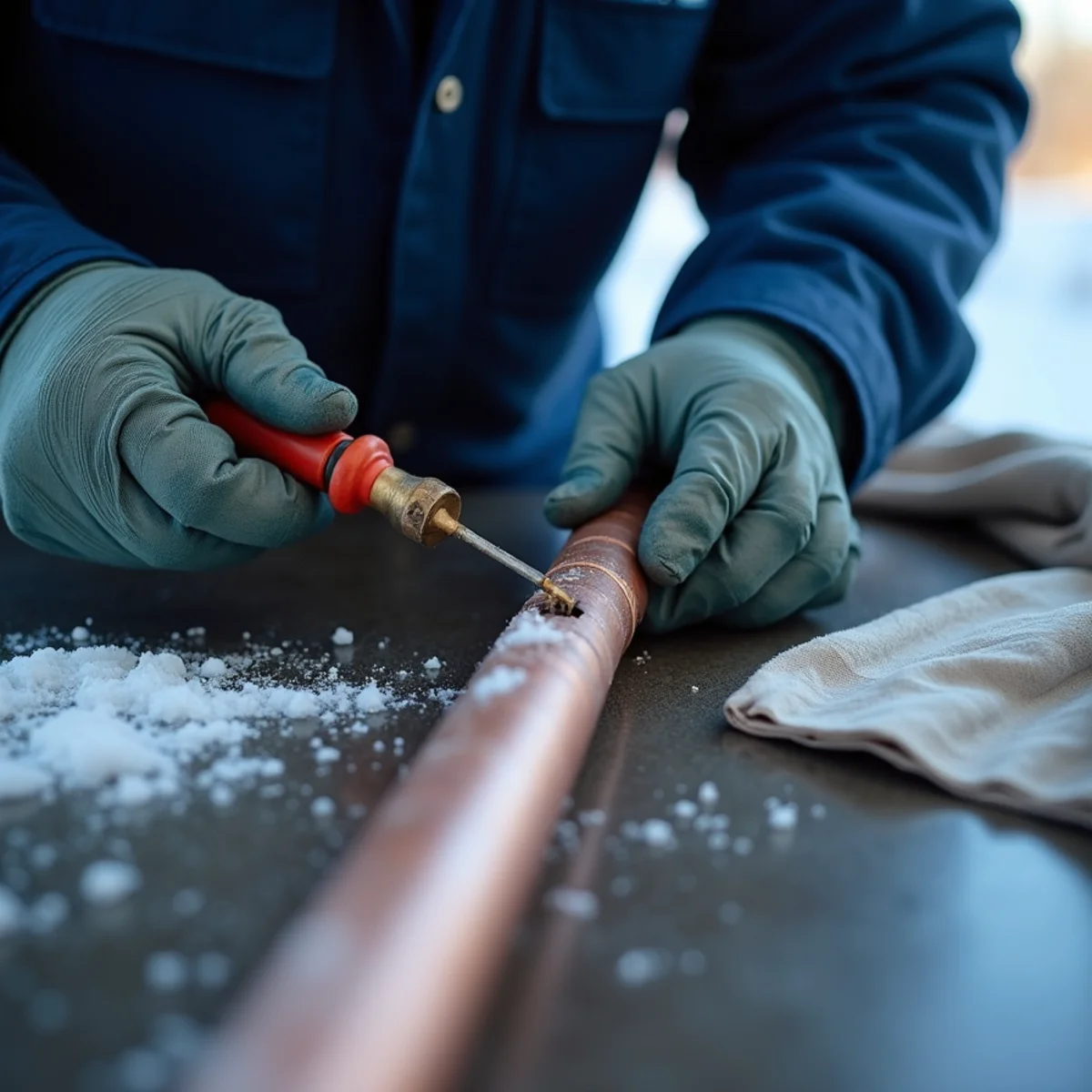
Signs You Need Frozen & Burst Pipe Repair
- No water from a faucet in freezing weather (likely frozen)
- A visible bulge or frost on an exposed pipe
- Water spraying or pooling after a freeze (burst)
- Banging or whistling in the pipes
- Pipes on exterior walls or in unheated spaces
If a pipe bursts
Close the main shutoff immediately, then open faucets to drain the system and relieve pressure. Stay clear of standing water near electrical equipment. Call us right away and, when safe, photograph the damage for your records. The faster the water stops, the less it costs to put right.
Safe pipe thawing
A frozen pipe that hasn't burst can often be saved. We locate the frozen section and thaw it gradually and safely. Never use a torch, open flame, or improvised heat source on a frozen pipe — it's a fire risk and can crack the pipe. If you find a frozen line, open the nearest faucet slightly so water can escape as it thaws, and call us.
- Never thaw with an open flame or torch
- Open the nearest faucet to relieve pressure as it thaws
- Keep the area warm and call for professional thawing
Preventing the next freeze
Once we've handled the emergency, we'll help you prevent a repeat: insulating vulnerable pipes, sealing drafts near exposed lines, and knowing which faucets to drip on the coldest nights. For homes that freeze in the same spot every year, rerouting or better insulation solves it for good.
Our Frozen & Burst Pipe Repair Process
Every job follows the same clear path — so you know what happens next and there are no surprises along the way.
- 1
Stop the water
If a pipe has burst, first move is the main shutoff and draining the system — we'll talk you through it on the call.
- 2
Locate the freeze or break
We find the frozen section or the split, checking exterior walls, unheated spaces, and the usual failure points.
- 3
Thaw safely — never with flame
We thaw frozen lines gradually and safely; open flame is a fire risk and can crack the pipe.
- 4
Repair the damaged section
We cut out and replace the split section and check nearby joints stressed by the same freeze.
- 5
Prevent the repeat
We insulate the vulnerable run, seal drafts, and tell you which faucets to drip so it doesn't freeze again next January.
Why McHenry County Homeowners Choose Ludwig
Illinois winters are hard on pipes, and we handle the emergency and the prevention so the same line doesn't split again next year.
Family-Owned & Local
A family name you can trust, serving McHenry County since 2016. You reach us, not a call center.
24/7 Emergency Service
Burst pipe or backup at 2 a.m.? We answer around the clock, every day of the year.
Licensed, Bonded & Insured
Fully licensed Illinois plumbers — your home and your investment are protected.
68 Five-Star Reviews
Neighbors across McHenry County rate us 4.9 stars for honest, quality work.
Frozen & Burst Pipe Repair Across McHenry County & Beyond
We handle frozen and burst pipes throughout the county's coldest corners — Harvard, Hebron, Marengo, and the rural homes where winter bites hardest.
Based in Lake in the Hills, we cover the whole county and the surrounding Fox Valley. Find your town on our service-areas page, or start with Algonquin, Crystal Lake, Cary, Huntley.
Related Plumbing Services
Frozen & Burst Pipe Repair FAQs
Shut off the main water valve immediately, then open faucets to drain the remaining water and relieve pressure. Avoid standing water near electricity, and call us. Stopping the water fast is the single most important thing you can do.
Often, yes. If you catch it frozen but intact, professional thawing can prevent the break. Open the nearest faucet slightly and call us — do not use a torch or open flame, which is dangerous and can damage the pipe.
Pipes in exterior walls, unheated basements, crawlspaces, garages, and attics are most at risk, along with outdoor hose bibs left connected. These are the areas we target for insulation and prevention.
Risk rises sharply once outdoor temperatures hit around 20°F or below, especially with wind and for pipes in unheated or exterior spaces — conditions we see every Illinois winter.
Yes, and that's the best time to call. If we can thaw the line safely before it splits, you avoid the flood entirely. Open the nearest faucet slightly and keep the area warm — but never use a torch or open flame — and we'll get to you.