
Commercial Backflow Testing Rules in Illinois
By Ludwig Family Plumbing · June 17, 2025 · 6 min read
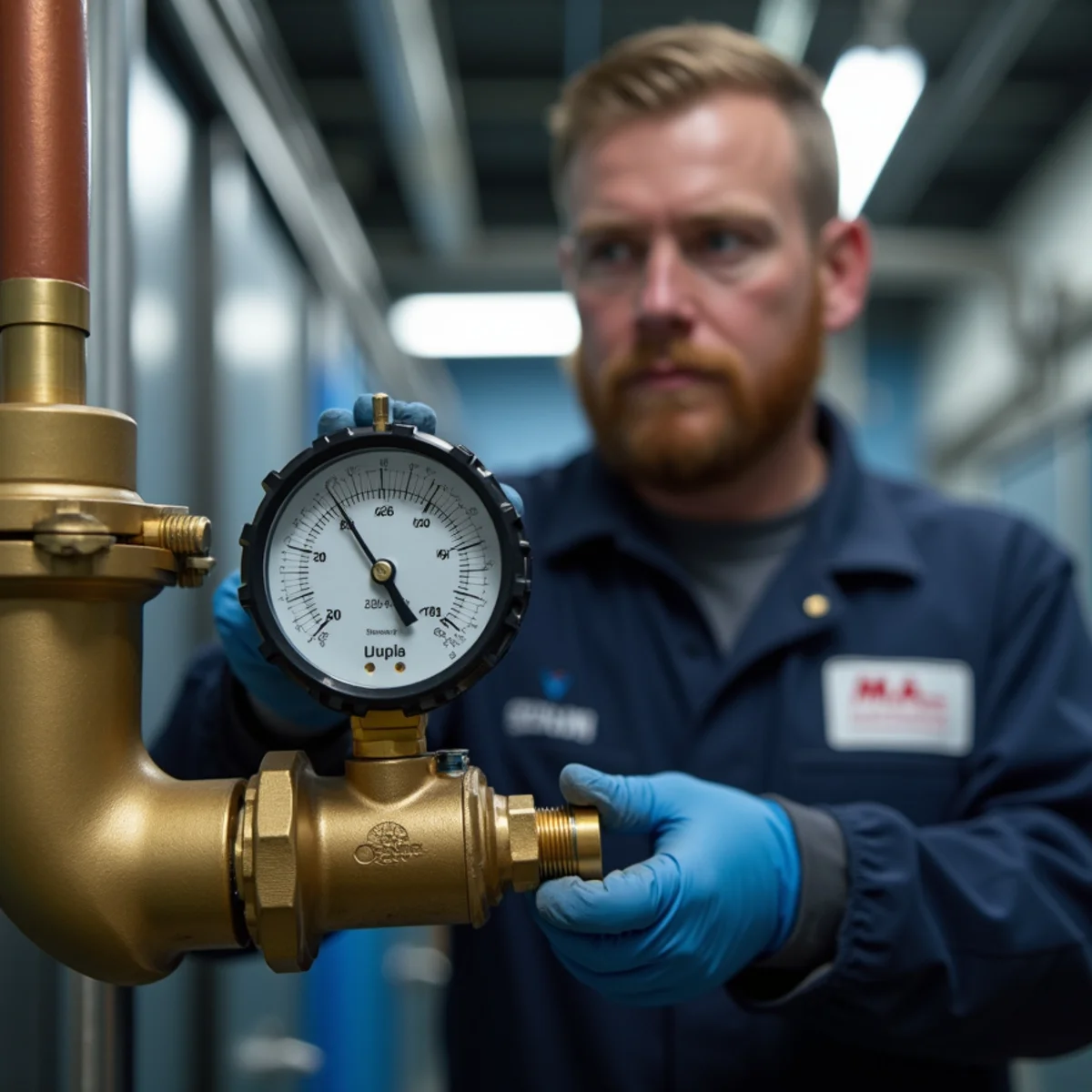
If you own or manage a commercial property in Illinois, backflow testing is almost certainly a requirement you're responsible for — and one that's easy to forget until a compliance notice from the water authority lands on your desk. Here's a plain-language guide to what backflow testing is, why it's required, and how to stay ahead of it.
What backflow is — and why it's dangerous
Water is supposed to flow one way: from the public supply into your building. Backflow is when that flow reverses — from a pressure drop in the main (a water-main break, heavy fire-department draw) or a pressure spike on your side — and potentially pulls contaminated water back into the public supply.
In a commercial setting with irrigation, boilers, chemical systems, or process equipment, that reversed flow could carry contaminants into the drinking water everyone shares. That's why the rules exist and why they're taken seriously.
What Illinois requires
Illinois plumbing regulations require backflow prevention assemblies on cross-connections that pose a contamination risk, and those assemblies must be tested — typically annually — by a licensed cross-connection control device inspector. The results are filed with the water authority (your municipality or water district).
Requirements and enforcement are administered locally, so the exact deadlines and paperwork vary by community — but the annual testing obligation is broadly consistent. Your local water department can confirm what applies to your property.
- Backflow assemblies required on at-risk cross-connections
- Testing typically required annually by a licensed tester
- Results filed with the local water authority
- Specifics enforced at the municipal level
What testing involves
A certified tester checks that the assembly's check valves and relief components hold and operate correctly, using calibrated gauges. If the device passes, the paperwork is filed and you're set for the year. If it fails, it needs repair or replacement, then a re-test — which is why leaving it to the last minute is risky.
Staying compliant without the scramble
The simplest approach is to work with a plumber who tests the assembly, handles the filing, and reminds you before the deadline each year — so compliance becomes routine instead of a fire drill. If a device fails, they can repair or replace it and re-test without you having to coordinate multiple vendors.
We handle commercial backflow testing, documentation, and any needed repairs for businesses and property managers across McHenry County and the surrounding area. If you're not sure when your last test was, that's worth checking today.
Where cross-connections hide in a commercial building
Backflow rules exist because of cross-connections most owners never think about — an irrigation system, a boiler feed, a mop-sink hose, a soda or coffee line, a fire-suppression system. Any of these can, under the right pressure drop, pull contaminated water back toward the public supply, which is why the assembly protecting them has to be tested and proven every year.
The practical risk isn't only a fine; a failed device left unaddressed is a genuine public-health liability. Testing early in your compliance window leaves room to repair and re-test a device that fails, instead of scrambling against a deadline.
The Bottom Line
Backflow testing protects the water everyone shares, and staying on an annual schedule keeps it routine instead of a scramble. If you're not sure when your device was last tested, that's worth checking today.
Need a hand from a licensed, family-owned McHenry County plumber? Call (831) 290-4327 — we're available 24/7 — or request a free quote.
How We Can Help
Serving Elgin, Schaumburg, Crystal Lake and all of McHenry County.
Frequently Asked Questions
Most commercial backflow prevention assemblies must be tested annually by a licensed tester, with results filed with the local water authority. Your municipality can confirm the exact schedule and requirements for your property.
You risk compliance penalties and, in some cases, water service consequences from the local authority — plus the underlying safety risk the rule is meant to prevent. Staying on an annual schedule avoids all of it.
Responsibility usually falls on the property owner or manager, though a lease can assign it. Either way, the water authority holds the property accountable, so confirm who's handling the annual test and filing before a notice arrives.